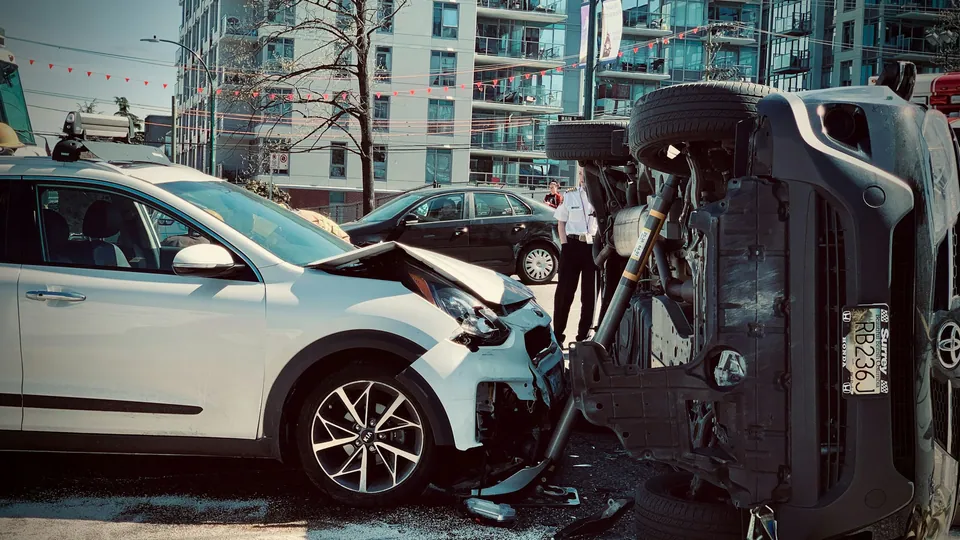
When another driver causes an accident, their liability insurance is supposed to pay for your injuries and damage. But that only works if they have insurance, and if their coverage is large enough. Some drivers carry no insurance at all, and many carry only their state's minimum, which can be far less than the cost of a serious accident.
Uninsured and underinsured motorist coverage, often shortened to UM/UIM, protects you in exactly those situations. It's one of the most important coverages to understand, and one of the most commonly overlooked. This guide explains how it works, what it pays for, how hit-and-run accidents are handled, and how to decide how much to carry.
The short version
- Uninsured motorist (UM) coverage pays when the at-fault driver has no insurance, or in many cases when you're hit by a driver who can't be identified, such as in a hit-and-run.
- Underinsured motorist (UIM) coverage pays when the at-fault driver has insurance, but not enough to cover your costs.
- It usually covers injuries to you and your passengers, and in some states and policies, damage to your car as well.
- Some states require it; in others it's optional, and you may have to decline it in writing.
- Many people choose UM/UIM limits that match their own liability limits.
Why it matters
Every state sets a minimum amount of liability insurance, and almost every state requires drivers to carry it. But laws don't guarantee that every driver complies, and the share of uninsured drivers varies widely from state to state.
Even insured drivers may not carry enough. State minimum liability limits are often modest compared with the cost of a hospital stay, lost income or a long recovery. If a driver with minimum coverage causes a serious accident, their policy can run out long before your costs are covered. Without UM/UIM coverage, you'd be left to rely on your own health insurance, your savings, or a lawsuit against a driver who may have few assets to pay a judgment.
The parts of UM/UIM coverage
UM/UIM is usually split into two types of protection, and policies and states differ in which they include:
| Coverage | What it pays for |
|---|---|
| Uninsured/underinsured motorist bodily injury (UMBI/UIMBI) | Medical bills, lost wages, and in many states pain and suffering, for you and your passengers |
| Uninsured motorist property damage (UMPD) | Repairs to your car, in states and policies that offer it; often with a deductible and a lower limit |
UM/UIM bodily injury coverage generally protects you and the people in your car. In many policies it also protects you and household members as pedestrians or cyclists hit by an uninsured driver. Check your policy to see who's covered and when.
How a UM/UIM claim works
When the other driver has no insurance
You make a claim with your own insurer under your uninsured motorist coverage. Your insurer steps into the shoes of the at-fault driver's missing insurer: it evaluates your injuries and damages and pays up to your UM limits. It may then try to recover the money from the at-fault driver directly.
When the other driver doesn't have enough
First, the at-fault driver's insurer pays up to their policy limits. Then your underinsured motorist coverage can pay the remaining amount, up to your UIM limits. Depending on your state, UIM coverage either fills the gap above the other driver's limits, or reduces your coverage by the amount their insurer paid. This detail can make a big difference, so it's worth asking how your state and policy handle it.
An example
Suppose a driver with $25,000 of bodily injury liability coverage causes an accident in which your medical bills and lost income total $60,000. Their insurer pays its $25,000 limit. If you have $100,000 of underinsured motorist coverage, your policy can cover the remaining $35,000, depending on how your state calculates it. Without it, the $35,000 would be yours to recover, if you could. The figures are illustrative.
Hit-and-run accidents
If you're hit by a driver who flees and can't be identified, there's no one's liability insurance to claim against. In many states, uninsured motorist coverage treats a hit-and-run driver as uninsured, so your UM coverage can pay for your injuries.
Damage to your car in a hit-and-run is handled differently from place to place. Some states' uninsured motorist property damage coverage applies to hit-and-runs; others exclude it, in which case your collision coverage would usually pay for the repairs, minus your deductible. Policies often require you to report a hit-and-run to the police promptly, so do that as soon as you can.
Is it required?
Requirements vary by state:
- Some states require uninsured motorist coverage, and some also require underinsured motorist coverage.
- Other states require insurers to offer it, and you have to reject it in writing if you don't want it.
- In some states it's simply optional.
Check your state insurance department's website or ask your insurer. Even where it's optional, it's worth thinking twice before declining it.
How much UM/UIM coverage should you carry?
A common approach is to match your UM/UIM limits to your own liability limits. The reasoning is simple: you've chosen liability limits to protect other people from injuries you might cause. Matching your UM/UIM limits gives you and your passengers the same level of protection from someone else's mistakes.
Consider carrying more than the minimum if:
- You don't have strong health insurance or disability coverage
- You regularly carry passengers, especially family members
- You'd struggle financially if an injury kept you from working for weeks or months
- You live in a state where uninsured or minimum-coverage drivers are common
UM/UIM coverage is often relatively inexpensive compared with the protection it provides, but prices vary by insurer, state and limits. Get quotes at a few levels to see the actual difference.
Stacking
In some states, if you insure more than one car, you can stack your UM/UIM coverage: combine the limits for each car into one larger limit. For example, two cars each with $50,000 of UM coverage might provide $100,000 of stacked coverage for a single accident. Stacking usually costs more, and it's not available everywhere. Ask your insurer whether stacking is available in your state and what it costs.
How UM/UIM works with other coverage
- Health insurance may pay your medical bills first in some cases, but it doesn't cover lost income or, generally, pain and suffering. UM/UIM can cover those where your state allows.
- Medical payments coverage or personal injury protection (PIP) pays certain medical costs regardless of fault, usually up to lower limits. In states that require PIP, it typically pays first, and UM/UIM may cover what's left.
- Collision coverage pays to repair your car regardless of fault, minus your deductible. Where uninsured motorist property damage isn't available, or has a lower limit, collision is how your car gets fixed after an uninsured driver hits you.
For how the main coverages fit together, see Liability vs Full Coverage and Comprehensive vs Collision Coverage.
What to do if you're hit by an uninsured driver
- Make sure everyone is safe and get medical help if anyone is hurt.
- Call the police. A police report is often essential for a UM claim, and many policies require one for a hit-and-run.
- Collect information: the other driver's name, contact details, license plate and vehicle, plus witnesses' details and photos of the scene.
- Tell your insurer promptly. Policies have deadlines for reporting accidents and claims.
- Keep records of medical treatment, bills, missed work and repair estimates.
For the wider claims process, see What Happens to Your Car Insurance After an Accident.
Common misunderstandings
- "My collision coverage already protects me." Collision repairs your car, but it doesn't pay for injuries, lost income or pain and suffering. Those are what uninsured and underinsured motorist bodily injury coverage is for.
- "The other driver is responsible, so I'll just sue them." You can, but a judgment is only worth something if the driver can pay it. Many drivers who carry little or no insurance also have few assets to collect from.
- "Minimum limits are enough because that's what the law requires." State minimums are the legal floor for liability coverage. They aren't designed around what a serious injury actually costs, which is exactly why underinsured motorist coverage exists.
- "It only covers me while I'm driving my own car." Many policies also cover you and household members as passengers in other cars, or as pedestrians or cyclists hit by an uninsured driver. Check your policy's definitions.
- "Declining it saves a lot of money." UM/UIM is often a relatively small part of a premium. Get a quote with and without it before deciding, so you know exactly what you'd save and what protection you'd give up.
Putting it together
- UM/UIM protects you when the driver who caused an accident has no insurance or too little.
- Bodily injury coverage pays for injuries to you and your passengers; property damage coverage, where available, pays for your car.
- Requirements vary by state. Where it's optional, think carefully before declining it.
- Matching your UM/UIM limits to your liability limits is a common, sensible starting point.
When you compare quotes, make sure each one includes the same UM/UIM limits; it's an easy line to miss. Our guide on how to compare car insurance options walks through a full comparison.
Frequently asked questions
Does uninsured motorist coverage cover hit-and-run accidents?
In many states, uninsured motorist bodily injury coverage applies to hit-and-run accidents, treating the unknown driver as uninsured. Coverage for vehicle damage in a hit-and-run varies by state; if it isn't included, collision coverage usually pays for repairs.
Will my rates go up if I make an uninsured motorist claim?
Claims where you weren't at fault generally affect rates less than at-fault claims, and some states limit rate increases for not-at-fault claims. Practices vary by insurer and state.
Do I need UM/UIM coverage if I have good health insurance?
Health insurance covers medical bills, but usually not lost income or pain and suffering, and it may not cover passengers who aren't on your plan. UM/UIM can fill those gaps, which is why many people keep it even with strong health coverage.
How much does uninsured motorist coverage cost?
It's often a modest part of a car insurance premium compared with the protection it offers, but the price depends on your state, insurer, limits and whether you stack coverage. Compare quotes at a few limit levels.