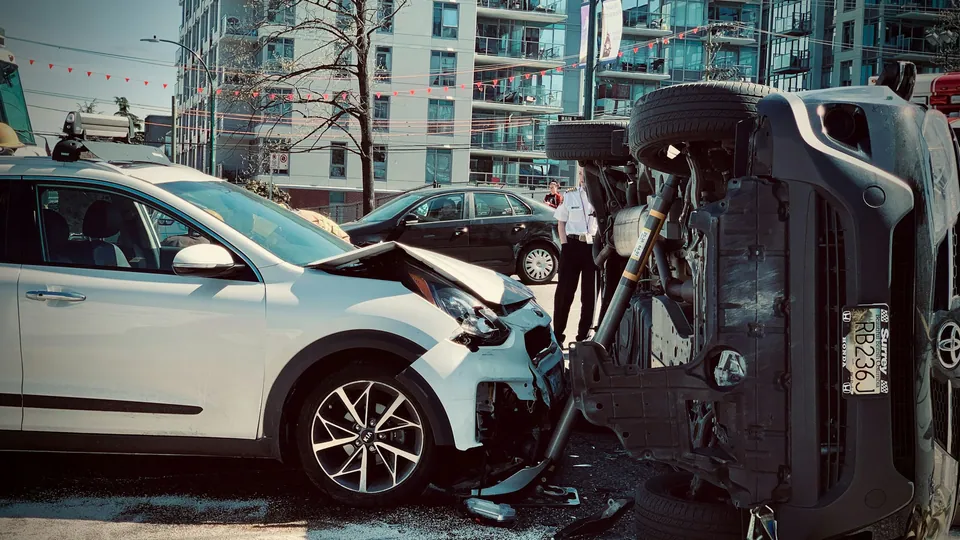
An accident is stressful enough without trying to work out how insurance will handle it. Knowing the process in advance makes it much easier: what to do at the scene, how a claim moves forward, who pays for what, and how the accident may affect your premium afterward.
This guide walks through each stage. Rules vary by state and insurer, so treat it as a general map and check the specifics of your own policy.
At the scene: what to do first
- Check for injuries and get help. Call emergency services if anyone is hurt. Safety comes before everything else.
- Move to safety if you can. If the cars can be driven and it's safe, move them out of traffic. Turn on your hazard lights.
- Call the police. Many states require a police report for accidents involving injuries or significant damage, and a report is valuable for any insurance claim.
- Exchange information with the other driver: names, phone numbers, insurance companies and policy numbers, driver's license numbers, license plates, and vehicle make and model.
- Document everything. Take photos of all the vehicles, the damage, the scene, road conditions and any traffic signs. Get names and contact details from witnesses.
- Be careful what you say about fault. Stick to the facts. Fault is determined later from the evidence, and an apology at the scene can be misread as an admission.
Reporting the accident to your insurer
Contact your insurer as soon as practical, even if you think the other driver was at fault or the damage is minor. Most policies require prompt notice of any accident, and delaying can complicate or even jeopardize a claim. You can usually report a claim through the insurer's app, website or phone line.
When you report it, have ready: the date, time and location; the police report number if there is one; the other driver's details; photos; and a factual description of what happened.
Do you have to file a claim for a minor accident? You generally need to report an accident to your insurer, but you may choose whether to claim for minor damage to your own car. If repairs cost little more than your deductible, paying yourself may make sense. Be careful about private arrangements with another driver, though: injuries sometimes appear later, and if you haven't reported the accident, your insurer may not be able to help.
Who pays: fault and no-fault states
How injuries and damage are paid depends partly on your state:
| At-fault (tort) states | No-fault states | |
|---|---|---|
| Injuries | The at-fault driver's liability insurance pays others' injury costs | Each driver's own personal injury protection (PIP) pays their own medical costs first, regardless of fault |
| Vehicle damage | The at-fault driver's liability insurance pays | Usually still handled by fault, through liability or your own collision coverage |
| Lawsuits | You can generally pursue the at-fault driver | Lawsuits for injuries are limited unless injuries meet a legal threshold |
Most states use an at-fault system. A number of states, including Florida, Michigan and New York, use no-fault rules for injuries, and the details differ significantly between them. Your insurer or your state insurance department can explain how it works where you live.
How fault is decided
Insurance adjusters determine fault using the police report, photos, statements from drivers and witnesses, vehicle damage, and traffic laws. Fault can be shared. Depending on the state, your share of the fault can reduce what you receive, or in a few states prevent you from recovering anything if you were partly at fault. If you disagree with an insurer's fault decision, you can ask how it was reached and provide additional evidence.
The claims process, step by step
- A claim is opened and assigned to an adjuster, who manages it.
- The damage is assessed, through photos you submit, a visit to a drive-in center, an inspection at a repair shop, or a field appraiser.
- An estimate is prepared for repairs. If the shop finds more damage once work begins, it can request a supplement.
- Repairs are authorized and paid, often directly to the shop, minus your deductible if you're claiming on your own collision coverage.
- Injury claims are handled separately and can take longer, especially when treatment is ongoing.
Choosing a repair shop
Your insurer may recommend shops in its network, which can make the process smoother and sometimes includes a repair guarantee. In many states, though, you have the right to choose your own repair shop. Ask your insurer about its policy and any guarantees before deciding.
Rental cars
If the other driver is at fault, their insurer is usually responsible for a reasonable rental car while yours is repaired. If you're claiming on your own policy, a rental is covered only if you have rental reimbursement coverage, which typically has a daily and total limit. Check before you book, so you don't end up paying for days that aren't covered.
Claiming through your insurer or theirs
When the other driver is at fault, you can usually claim through their insurer, with no deductible, or through your own collision coverage, which is often faster. If you use your own coverage, your insurer may recover its costs and your deductible from the other insurer. See Comprehensive vs Collision Coverage for more on how this works.
If your car is totaled
If repairs would cost too much relative to the car's value, the insurer declares it a total loss. Instead of paying for repairs, it pays the car's actual cash value (its market value just before the accident) minus your deductible. If you have a loan, the payment usually goes to your lender first.
If you owe more than the car is worth, the payout may not cover your loan. Gap insurance covers that difference. If you think the insurer's valuation is too low, you can ask how it was calculated and provide evidence, such as recent sale prices for similar cars or records of recent upgrades and repairs.
If the other driver is uninsured
If the at-fault driver has no insurance, or not enough, your uninsured and underinsured motorist coverage may pay for your injuries, and in some states your car. Your collision coverage can also pay for repairs, minus your deductible. See Uninsured and Underinsured Motorist Coverage Explained.
How an accident affects your premium
An at-fault accident often leads to a higher premium at renewal. This is sometimes called a surcharge. How much it rises, and for how long, depends on the insurer, the state, the severity of the accident and your record. Many insurers consider accidents from roughly the past three to five years.
A few factors can soften the effect:
- Not-at-fault accidents generally have a smaller effect, or none, and some states limit rate increases when you weren't at fault.
- Accident forgiveness, offered by some insurers as a reward or an add-on, can prevent a first accident from raising your rate.
- A clean record afterward helps; the effect of an accident usually fades over time.
- Shopping around at renewal can help, because insurers weigh accidents differently.
To see how driving history can change an estimate, try our Car Insurance Calculator. For the wider picture, see How Are Car Insurance Rates Calculated?
Common mistakes to avoid
- Not calling the police when injuries or significant damage are involved
- Leaving the scene without exchanging information, which can be illegal
- Admitting fault before the facts are clear
- Waiting too long to report the accident to your insurer
- Accepting a quick settlement for injuries before you know the full extent of your treatment
- Not keeping records of medical visits, bills, missed work and conversations with insurers
For serious injuries or disputed fault, consider getting advice from a qualified attorney before agreeing to a settlement.
Claim terms in plain English
| Term | What it means |
|---|---|
| Adjuster | The insurance company employee or contractor who investigates the claim and decides what's paid |
| First-party claim | A claim on your own policy, such as collision or uninsured motorist coverage |
| Third-party claim | A claim against the other driver's insurance |
| Liability | Legal responsibility for the accident and the damage it caused |
| Subrogation | Your insurer recovering what it paid from the at-fault driver's insurer |
| Supplement | An additional repair estimate when more damage is found during repairs |
| Actual cash value | The car's market value just before the accident; what's paid for a total loss |
| Total loss | When repairs would cost too much relative to the car's value, so the insurer pays its value instead |
| Diminished value | The loss in resale value after a car is repaired; some states allow a claim for it against the at-fault driver |
Keeping the claim on track
- Write down the claim number and your adjuster's name and contact details.
- Keep a simple log of every call and email: the date, who you spoke with and what was agreed.
- Respond to requests quickly, and ask for deadlines in writing.
- Ask for explanations of anything you don't understand, including how a valuation or fault decision was reached.
- If you can't resolve a dispute, ask about the insurer's appeal process. Your state insurance department also handles consumer complaints about insurers.
Putting it together
- At the scene: safety first, then the police, information, photos and witness details.
- Report the accident to your insurer promptly, even if you may not claim.
- Who pays depends on fault and on whether your state is no-fault for injuries.
- Repairs are paid minus your deductible when you claim on your own coverage; total losses pay the car's value.
- At-fault accidents often raise premiums for a few years; not-at-fault claims usually affect them less.
Frequently asked questions
How long does an accident stay on my insurance record?
Many insurers consider accidents from roughly the past three to five years when setting rates. The exact period depends on the insurer and state.
Will my insurance go up if the accident wasn't my fault?
Not-at-fault accidents generally have a smaller effect on premiums, or none, and some states limit rate increases for not-at-fault claims. Practices vary by insurer.
Should I report a minor accident to my insurer?
Most policies require you to report accidents promptly, even minor ones. You can often decide separately whether to file a claim for your own damage. Reporting protects you if the other driver later claims injuries.
Can I choose my own repair shop?
In many states, yes. Insurers may recommend network shops, sometimes with a repair guarantee, but you can usually choose. Ask your insurer about its policy before repairs begin.